David Cameron once said: A vote to leave is the gamble of the century. And it would be our children’s futures on the table if we were to roll the dice. Brexit will negatively affect the United Kingdom’s economy since the country will no longer be part of the common market that allows free movement of capital, labor, materials, and products within the members of the European Union (EU). For instance, the phenomenon will have detrimental effects on one of UK’s giant pharmaceutical manufacturer, the GlaxoSmithKline. The corporation will have colossal operational problems as a result of Brexit since it has already successfully grown to acquire significant control both in the UK and in other EU countries (Bloomberg, 2019). In the UK, Brexit will have an adverse impact on producing and distributing of drugs and medicine-related products since it influences major governing laws. Consequently, firms need long-term planning of at least ten years before the production of a new drug. Hence, GlaxoSmithKline must apply change management strategies to open a new subsidiary plant in another EU country to impede the detrimental effects of Brexit that threatens the survival of its business.
The Problem Caused by Brexit
The EU requires that for any country to distribute pharmaceutical products in the region, the manufacturing plant must be located within a member country. The regulation means that GlaxoSmithKline’s products that are manufactured in the UK will have no chance of entering EU nations (Kwon, 2018). In fact, adherence to all EU’s rules, specifications, and standards is a strict requirement. Such enforceable licensing restrictions will undermine the corporation’s ability to sell in EU member countries due to Brexit, leading to loss of revenue. Hence, GlaxoSmithKline will face difficulties in accessing raw materials and labor when UK leaves the EU, increasing manufacturing costs.
The Change Required for GlaxoSmithKline
By opening a new subsidiary in an EU member country to manufacture some of its products, GlaxoSmithKline is able to protect its market share in Europe. The new plant will be apart from the current UK organization to shelter any detrimental effects in the aftermath of Brexit. Separation of operations between the parent company and the subsidiary will also protect its market share away from home country, securing segments in the other EU nations (Kwon, 2018). However, the new subsidiary in a EU member country is an achievement that will come through great sacrifice of resources to cater for the startup costs.
Despite the increased expenditures, a change in management is necessary because the firm will have to deal with the complexity of building coordination between the two branches. Consequently, GlaxoSmithKline will have to establish a new structure of information sharing and monitoring enterprise activities. According to Burnes(2009), the best way to achieve this aim is through employing a knowledge-based data sharing system as it ensures continuity of internationalized businesses. The susceptibility of deviating from the operational norms of the organization also calls for the integration of management functions. Such action will allow a reasonable level of autonomy for GlaxoSmithKline, enabling the foreign subsidiary to address its unique problems differently from the host country. In the end, a shift in management will force the two GlaxoSmithKline business branches to comprehend variation in regulations and standards of manufacturing between the two countries.
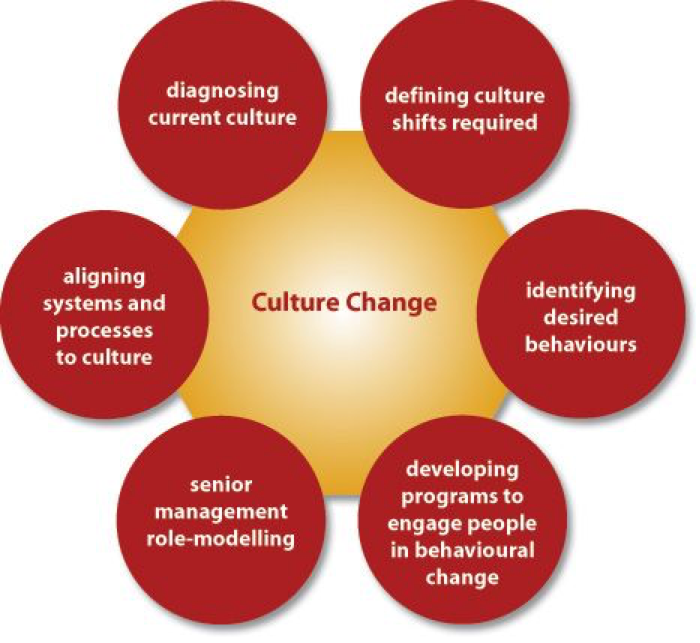
A relocation of few workers from the UK to the foreign country is also inevitable. Such transfer will allow smooth operation of the new subsidiary. Consequently, cultural change, as it relates to flexibility in dealing with diversity, is another challenge required by GlaxoSmithKline’s workers and its leadership (Kotter & Schliesinger, 2008). Ultimately, the relocation of few employees demands the firm to prepare for a framework of learning in order to maintain workforce motivation and performance in the new subsidiary.
The Action Plan
Implementing change at GlaxoSmithKline is aligned with the Lewin’s change model. The concept effectively deals with the numerous complexities associated with new business ventures, simplifying transition processes (Creately, 2019). In relation to GlaxoSmithKline, the framework proposes three major steps: unfreezing, changing, and refreezing.
- Unfreezing: GlaxoSmithKline has to make thorough corporate arrangements prior to implementing the subsidiary change. The planning entails educating the workforce in the UK to realize the significance of opening the new subsidiary in an EU member country. During this stage, employees have to be conversant with the new organizational structure in order to build motivation. The leadership has to identify the necessary resources required for the change process.

- Changing: this is the period where the transition process is initiated, applying all business tools and operational methods. Firstly, GlaxoSmithKline workers will learn new skills, cultural shifts, and previously unknown work-related patterns in compliance with the subsidiary’s diversity requirements. Secondly, the change in production processes will also be implemented at this stage, complying with new regulations in the EU country. Thirdly, the leadership will learn new managerial dictates such as cultural competency and tolerance to new policy disparities. In the end, a new advanced communication network will be popularized at this phase.
- Refreezing: upon successful transition, the firm’s leadership has to define the new traits and operation patterns as key components of the organizational culture. The act will allow the business shift to be permanent, guaranteeing successful business operations in the new region.
The GlaxoSmithKline’s plausible change process helps me comprehend the fact that leading a successful organization needs the ability to deal with uncertainties. Consequently, I believe that failure to implement changes in a timely manner may lead to collapse. Hence, as a leader, I plan to incorporate a change culture as a continuous process rather than a single event. I now understand that successful change requires the business manager to display a high degree of open-mindedness that realigns the internal resources of the company with its the external forces (McGuire, Palus, Passmore, & Rhodes, 2009). Consequently, I recognize change as the modern form of business operation that guarantees growth and survival. GlaxoSmithKline’s plausible change process has taught me that organizational change is required to either rescue the firm from a current problem or to win the benefits of a new opportunity created by a possible business risk.
To recall, GlaxoSmithKline must open a new subsidiary in another EU member country to manufacture some of its products. The shift will enable it to sustain its business in the event that Brexit ensues. The decision of UK to leave EU will have detrimental economic effects on the current GlaxoSmithKline’s plant in the country. The corporation will undergo colossal change since relocation from the UK to a foreign EU country requires some workers to also move to the new subsidiary plant. Lewin’s change model demonstrates how such transformation can enable smooth running of the new business. Consequently, cultural change will happen, requiring GlaxoSmithKline’s management to use operational flexibility to deal with diversity. In the end, GlaxoSmithKline’s leadership will have to solve new challenges, sustaining the firm in the aftermath of Brexit.
References
Bloomberg (2019). Company overview of GlaxoSmithKline UK Limited. Bloomberg. Retrieved from http://www.bloomberg.com/research/stocks/private/snapshot.asp?privcapId=22512384
Burnes, B. (2009). Managing change(5th ed.). Upper Saddle River, NJ: Financial Times Press.
Creatively, (2019, January 29). The ultimate list of change management tools to drive change like a pro. Creately Blog.Retrieved from creately.com/blog/diagrams/change-management-tools-list/
Kotter, J. P. & Schliesinger, L.A., (2008). Choosing strategies for change. Harvard Business Review,86(7/8), 130-139.
Kwon, D. (2018, October 12). The UK pharmaceutical industry braces for Brexit. TheScientist.Retrieved from http://www.the-scientist.com/news-opinion/the-uk-pharmaceutical-industry-braces-for-brexit–64926
McGuire, J. B., Palus, C. J., Passmore, W. & Rhodes, G. B. (2009). Transforming your organization. San Diego, CA: Centre for Creative Leadership.


 Salim's Business World